
Spine Challenger South - An experiment in measured escalation

Updated: Jan 26
I’ve followed the Montane Spine races with interest since taking up running — the endurance nature of it appeals to me. It’s not so much a running race as a race of attrition. It’s about understanding where your own personal limit is: can you keep moving when every part of your body just wants you to stop?
I love the tortoise and the hare aspect - sometimes the fast runner ends up capitulating with only a few miles to go as their body gives up whilst a strategic plodder eating pub grub along the route can end up finishing higher than expectations.
Having booked onto the Winter Spine Sprint South back in January 2024, I was forced to pull out following ankle surgery after my 100 miles on the South Downs Way the previous summer. The surgery (a Broström procedure) was needed to stabilise my ankle, but the surgeon suggested it was unlikely I’d be back to covering the distances I had before — hopefully I’d at least be pain-free.

This news was pretty distressing. During recovery I struggled mentally with the inability to exercise; my whole running journey has been about doing what I can with my body while it still works. I was scared of losing something I really loved.
After a cautious return, some semblance of regular running fitness coincided with the Spine races last year (January 2025). I sat dot-watching Jack Scott smash the main course record and desperately wanted to be out there — to become part of the Spine family. On a whim, I booked the Spine Challenger South and decided I’d use the financial commitment as motivation to get myself back physically.
It was only after booking that I realised how mad this was. I’d run a handful of 20 km runs in the previous six months, and before that barely any mileage since the operation. I had just booked a continuous 108-mile (174km for those metric fans out there) race along the Pennine Way in mid-winter. This was far from the measured escalation that all my Ultra running books tend to refer to.

The preparation is daunting: insurance, medical declarations, navigation requirements, and a 30+ item mandatory kit list which, when combined with food, water, and other bits such as poles, comes in at well over 10 kg. It’s not unfair to compare it to Formula One and how finances play a part — the race isn’t cheap, but you can make it cheaper. Lighter (and drier) things cost a lot more and arguably increase your chances of finishing and finishing faster. They also dramatically increase the pressure on your bank account. There’s a reason the elites (with the same kit list) have packs around 5-6 kg, while the rest of us might be hauling around roughly double that.
Once I joined the WhatsApp group with other competitors — a lot of whom had “graduated” from a Sprint to the Challenger — I immediately felt out of my depth. Imposter syndrome kicked in hard and I became mildly obsessed with researching everything. By the end I hadn’t run the race, but had at least prepared for several disasters.
After the first part of the year building fitness and avoiding injury, I followed a self-planned programme with a more relaxed mindset than usual (based on “Relentless Forward Progress”). I wasn’t going to chase huge mileage — first and foremost I’d avoid injury. This meant fewer club runs than I’d have liked, but self-preservation had to come first. I took step-down weeks, did some S&C, and leaned heavily on a very good physio. When a niggly hip injury cropped up, he correctly assessed that I wasn’t about to stop running and helped me manage it while still training. That was invaluable.
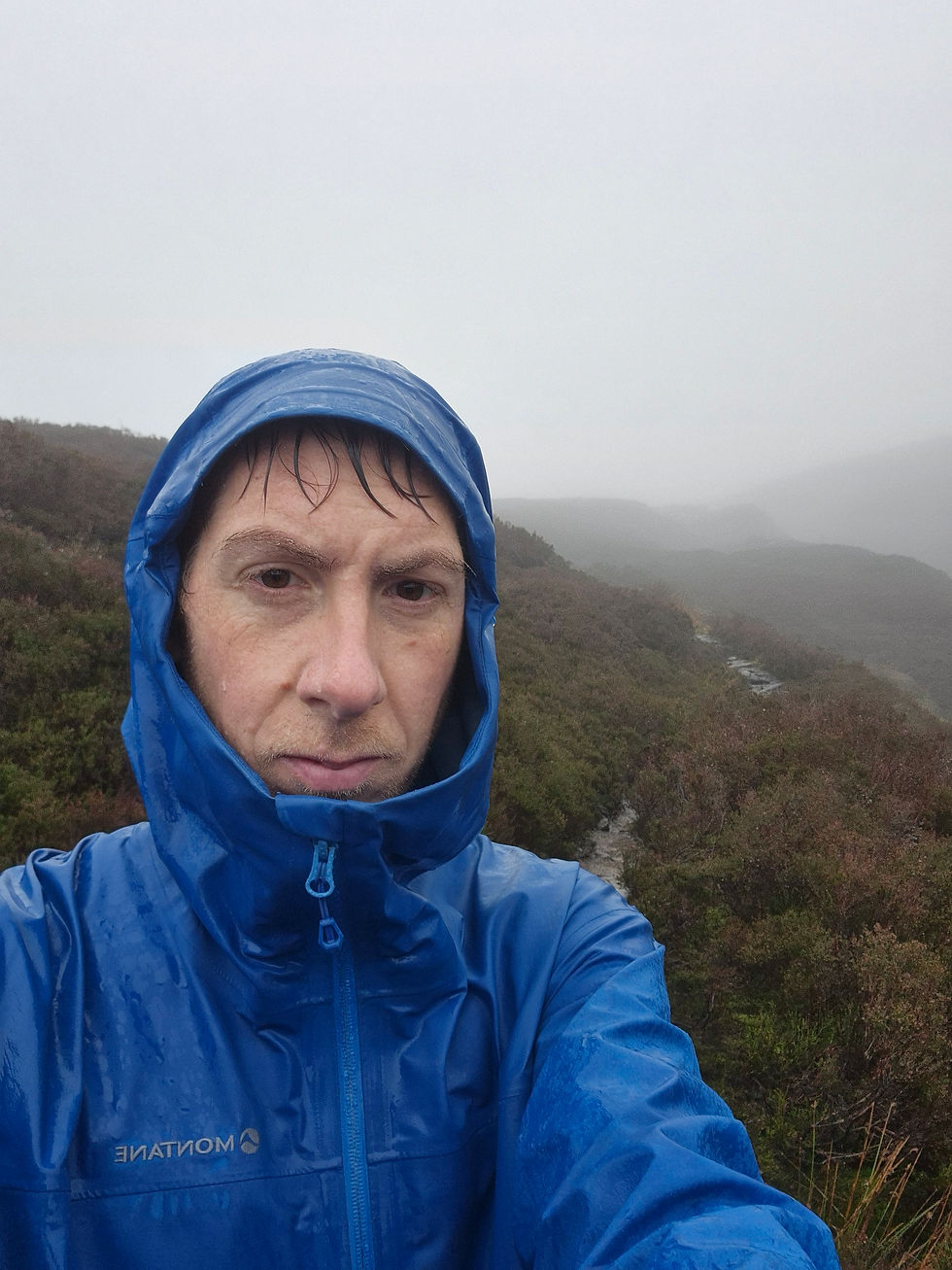
By October I added more specificity: hill work and carrying the bag. I headed to Yorkshire for the Three Peaks hike, knocked out a few 20-mile loops in Wendover Woods, and finally got up to Derbyshire to recce the opening section of the race between Edale and Marsden. The weather was simply grim: poor visibility, relentless rain, and deep peaty bogs.

Lessons learned: pacing would be critical, I needed to be smarter about fuelling (nausea was an issue), and yes — investing in kit is absolutely worth it. My waterproof DexShell socks were phenomenal right up until I fell into a river and became fully submerged, and even then the compression stopped too much water getting in. My Montane jacket and Inov-8 waterproof trousers were equally superb.
Christmas was strange. We went to Copenhagen as a family, which meant my taper started earlier than planned, but I desperately needed the break. I’d been training solidly since summer. I took a bit of a risk ice skating but it felt the family time was necessary – a bit of a chance to decompress.

Once Christmas was out of the way, the panic buying began — spares of things I’d probably never need but whose absence could derail the race. (I personally witnessed someone being stopped at a checkpoint due to kit failure. A significant part of this race is logistics management.)
Then came the checklists. Checklists for everything: travel, pre-race prep, checkpoints, food, navigation. When you realise you have a checklist of checklists you are approaching saturation point.

Kate took a keen interest in this phase, and we even bought a laminator to allow me to carry micro checklists with me. This is when I knew I might have gone too far.


When race week arrived, so did the weather. Heavy snow was forecast for 48 hours prior thanks to Storm Goretti. Train companies pre-emptively shut the Manchester–Sheffield line, so the organisers delayed the 8 am start to 10 am to allow racers to complete kit check on race morning if needed.

I like options, so I booked a late-cancellation hotel in Manchester as backup. Thankfully the roads were fine, and I carpooled in an Uber with two other racers on Friday afternoon and made my original kit check.
You may be asked to show everything or just a few items — you don’t want to be rummaging through dry bags under pressure, so I’d unpacked into a shopping bag for quick access (it was some excellent advice I’d received in the taxi). I only had to demonstrate a few items (including proving my watch could show grid references), had my photo taken, and was done. Strictly sticking to the kit list meant zero issues.
The YHA at Edale is close to the start and runs a shuttle bus, so it seemed ideal. I experienced pure joy when I realised I’d booked a private room rather than a shared one — like finding a tenner in your pocket.
This joy lasted approximately 14 seconds, until I was handed my key and discovered the room was in a separate building up 100+ steep, icy steps behind the hostel. Dragging my 20 kg drop bag up there was not the pre-race prep I needed.
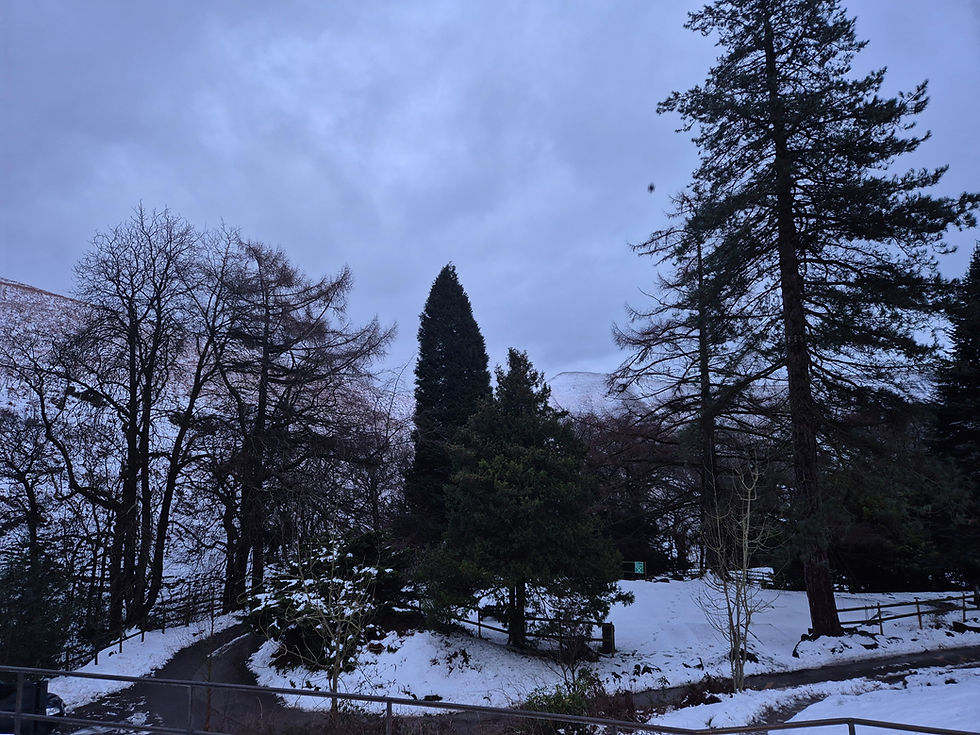
After packing and repacking my bags at least five times, I ate dinner in the hostel alongside Eugenie Rosello Sole (who was leading the Spine right up until the last few miles before sadly dropping out) and there was a nice buzz of encouragement around the place. I managed about five hours of sleep and was up by 6 am. With the 10 am start, there was a lot of waiting around — shivering in race gear, receiving Spine war stories from race veterans – they all seemed deeply calm in a way that I just simply wasn’t.
It was a relaxed start in many ways, but I couldn’t stop thinking about the daylight I was losing before even starting. So much of the race would already be in darkness.


Comments